The portal of the Umbria Region that allows you to get information on the main places of culture in Umbria (museums, archaeological sites, libraries ...)
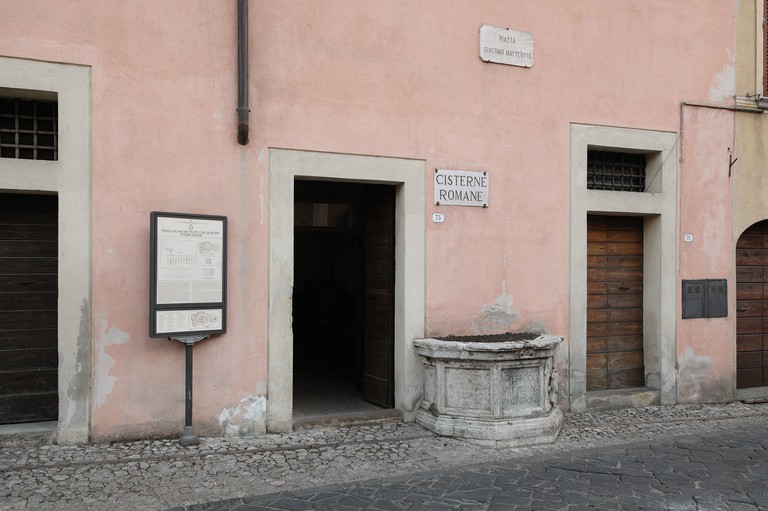
The Cisterne Romane are located under the current Piazza Matteotti, corresponding to the ancient public square of the Roman age, the Forum, right at the northern edge of the town of Amelia.
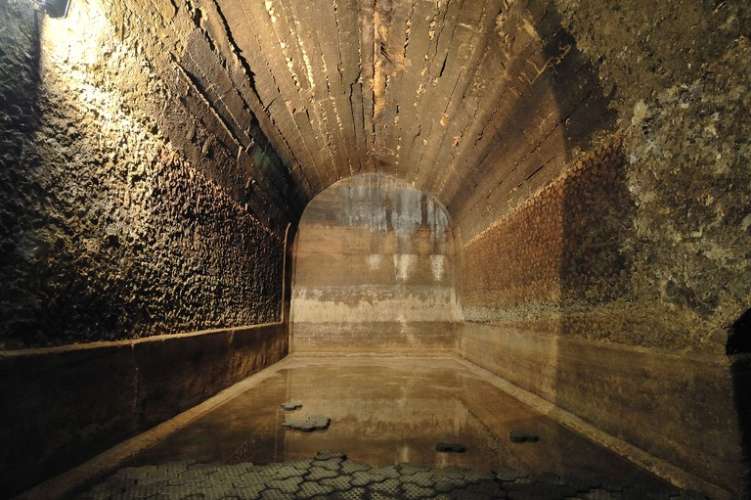
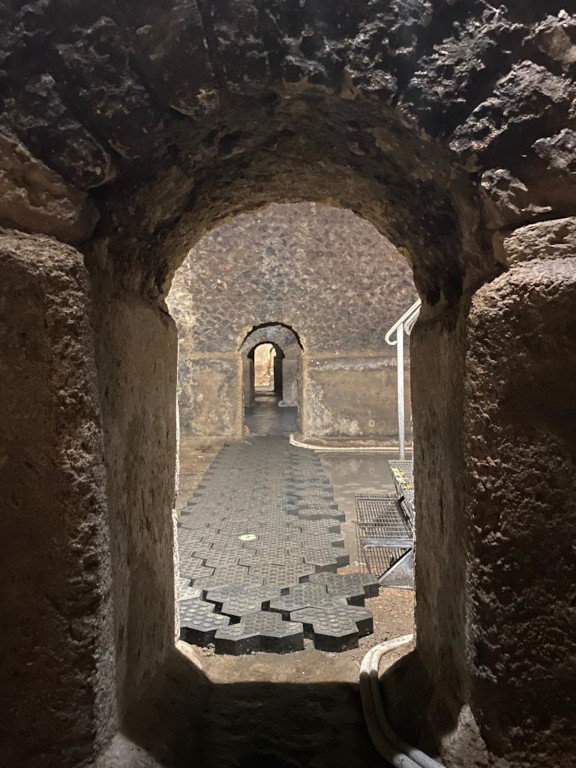
It is the main hydraulic engineering monument designed in the Roman age, which visitors can explore following a suggestive itinerary in the underground passageway of Amelia, discovering its cultural hypogeal heritage.
The imposing construction was realized between the 2 and 1 century B.C., when Amelia was promoted to the rank of Municipium—Roman provincial government—and endowed with a series of infrastructure—walls, terraced-sloping lands and roads—of civic function.
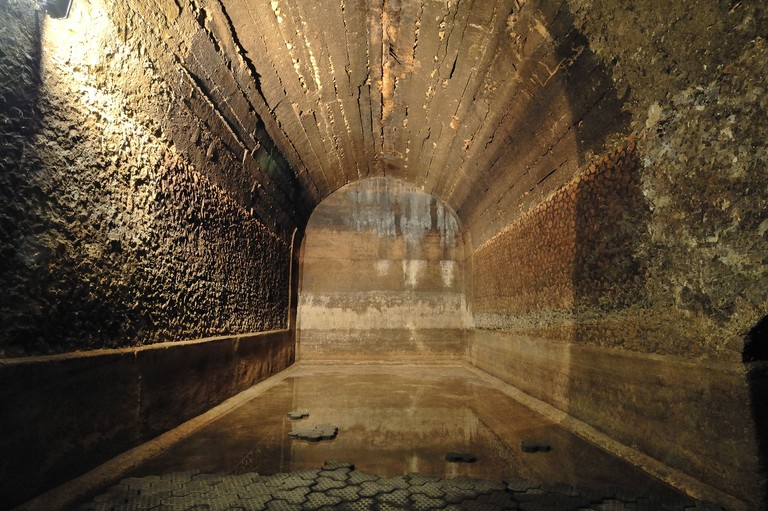
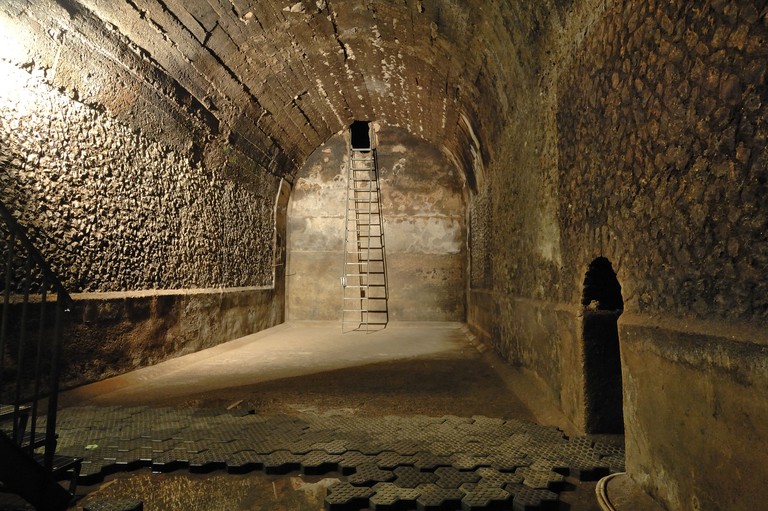
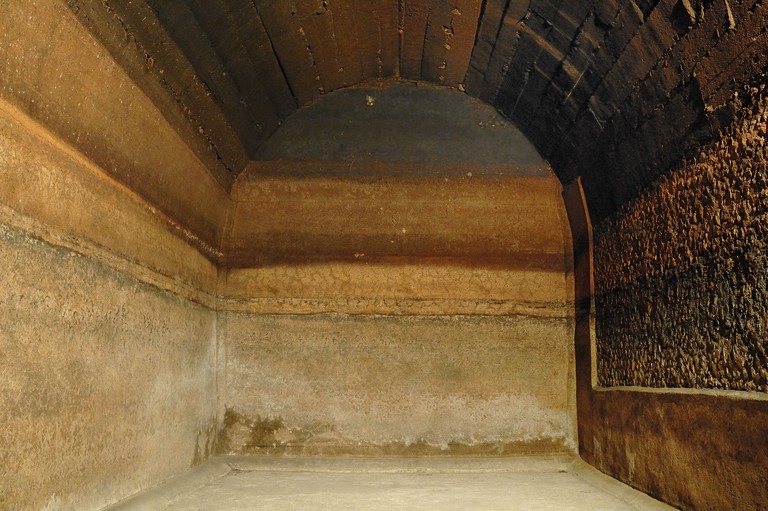
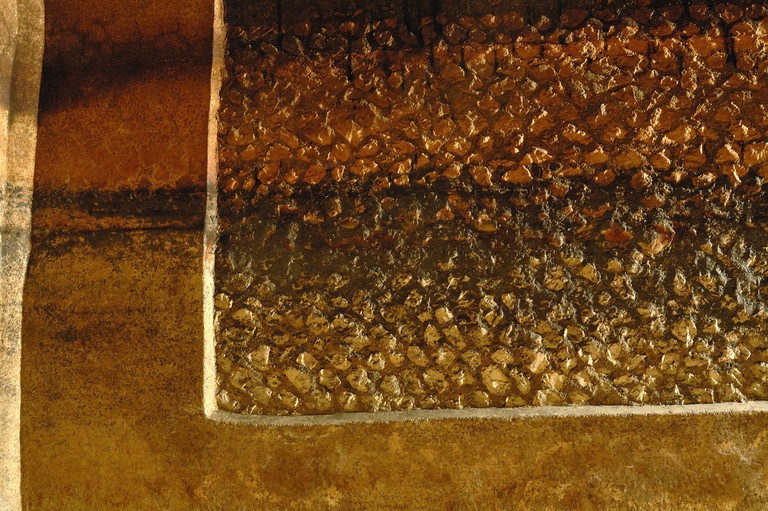
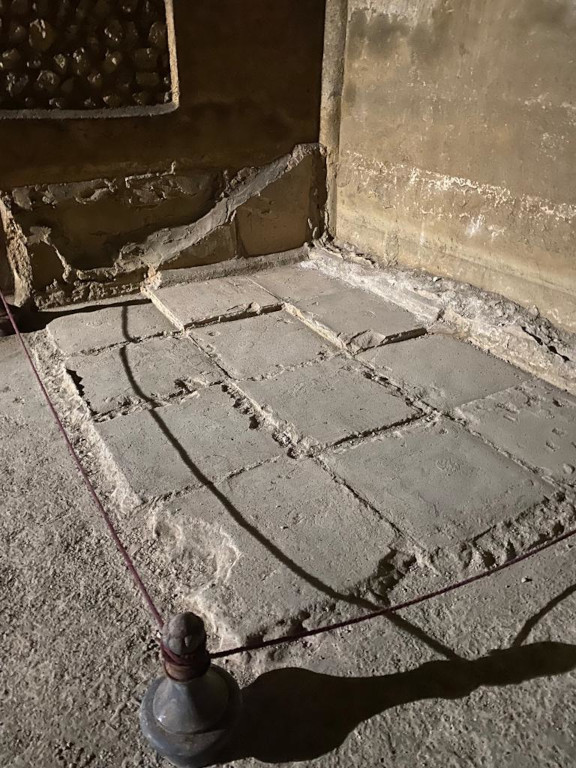
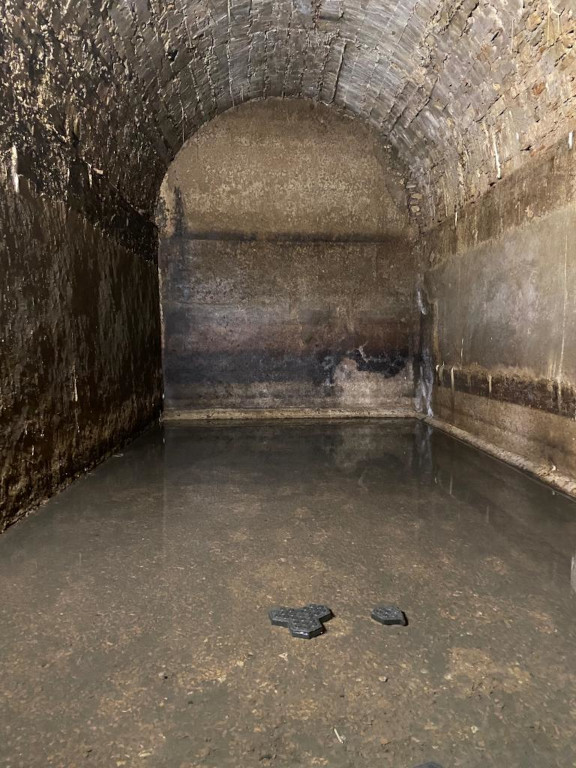
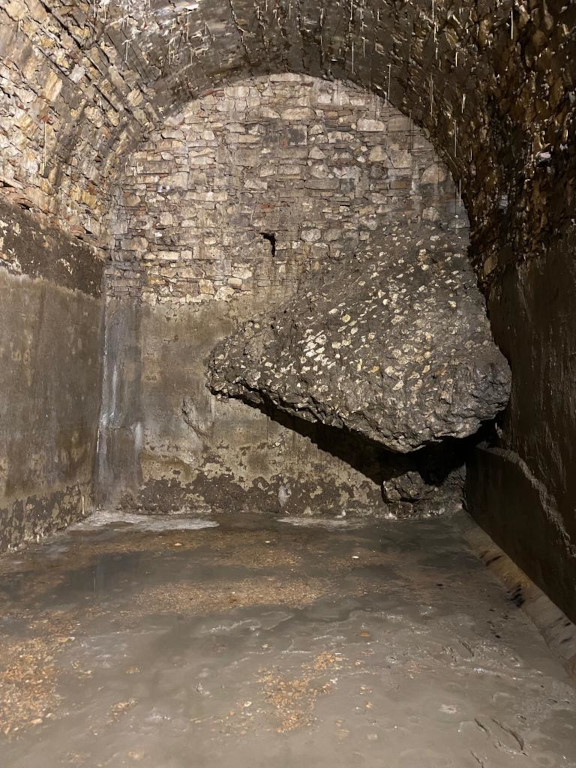
It consists of a huge rectangular construction—57,50 meters long by 19,60 meters wide—subdivided into ten parallel rooms covered by barrel vaults—5,7 meters high on average—excavated inside the limestone rock and later entirely coated with Opus incertum masonry, characterized by a first core of Opus Caementicium—fresh cement—upon which a layer of uncut stones of tuff are inserted. Its well conserved condition is exceptional, with all the fundamental components necessary for the functioning of the entire complex still there, including the water adduction system, the internal device to regulate the maximum level of water and the emptying system of the cistern.