The portal of the Umbria Region that allows you to get information on the main places of culture in Umbria (museums, archaeological sites, libraries ...)
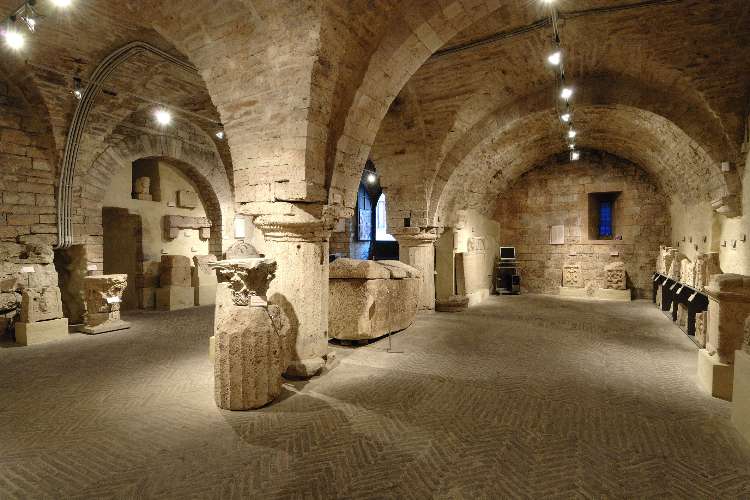
The Museo Archeologico e Foro Romano is located in the most central area of Assisi, the museum site extends under the current Piazza del Comune, which is the city’s focal point from where—still today—the Minerva Roman Temple dominates, and on which the facades of the most important medieval buildings of the town overlook.
The archaeological area corresponds to the so-called Central Terrace, one of the monumental platforms realized in the 2nd century BC, in the context of the planning of the Roman town of Asisium. The terrace that for the centrality of its position is traditionally considered to be the Forum of the town, is dominated by the overbearing Temple of Minerva, which is one of the few Roman religious architectural constructions to remain intact; it is still visible on the Northern side of the square.
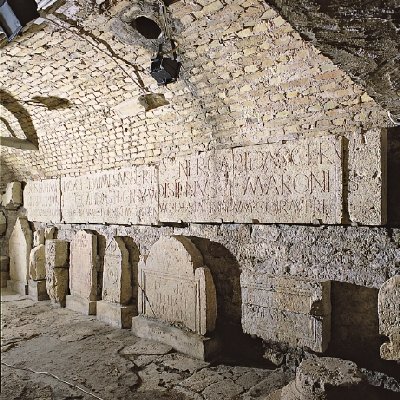
The itinerary, currently called “A Journey To the Ancient Square of Assisi”, starts from the former Crypt of San Nicolò, which is the site from where the majority of all town and surrounding territorial archaeological finds—epigraphs and urns discovered since the 19th century—come from. Going through a corridor, with a transparent glass pavement from which the visitor can appreciate the original Roman pavement below, skirting the Temple’s terraced wall, there is a monumental inscription commemorating the 30 B.C. works held under the care of the “Quattuorviri”—the ancient Roman supreme magistrates who ran the Asisium Municipality. Along the opposite wall, the funerary steles and—at a short distance, at the end of a short passage—a large pedestal in which the statues of the Dioscuri, Castor and Pollux—sons of Jupiter—used to stand, are arranged. Going on, a little further, the visitor reaches a vaulted hall, the Sala delle Volte, in which restored marble statues—among them one of the half-naked male characters of the 1st century A.D. found in the excavation area—are arranged.



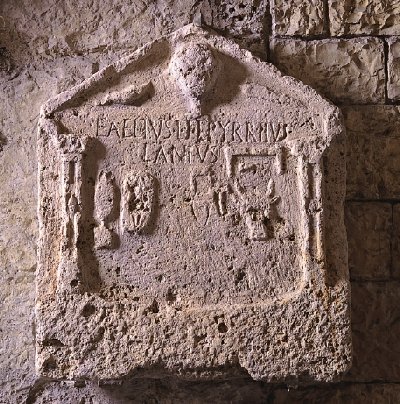
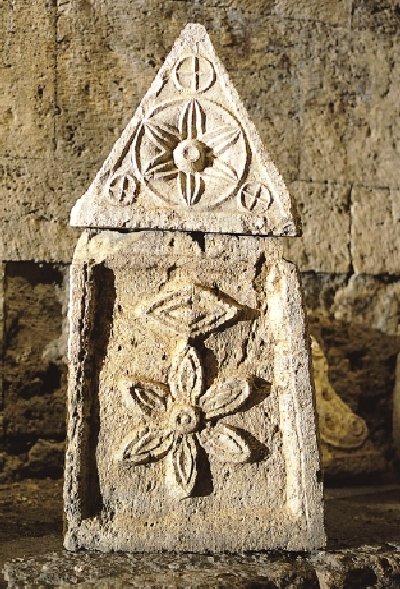
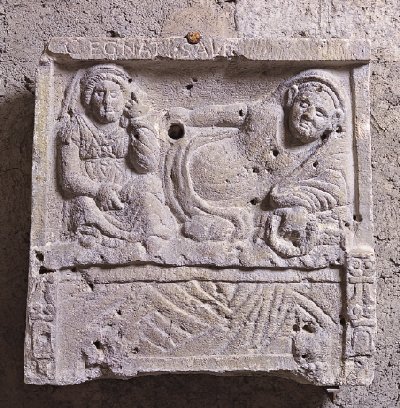
_Iscrizione_del_medico_Publio_Decimo.jpg)
_Cippo_di_confine_umbro.jpg)