The portal of the Umbria Region that allows you to get information on the main places of culture in Umbria (museums, archaeological sites, libraries ...)
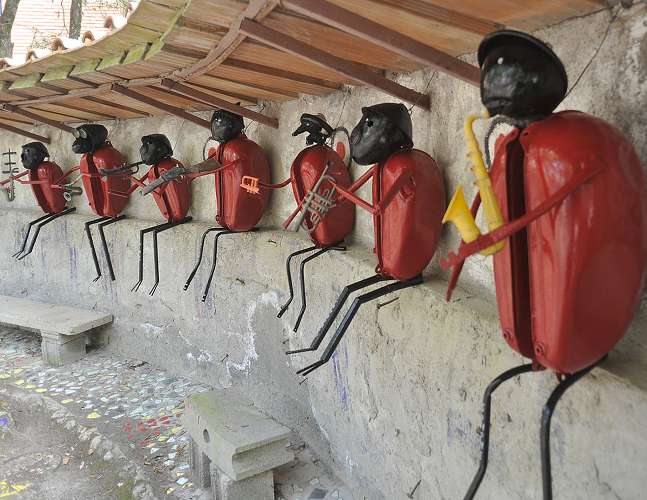
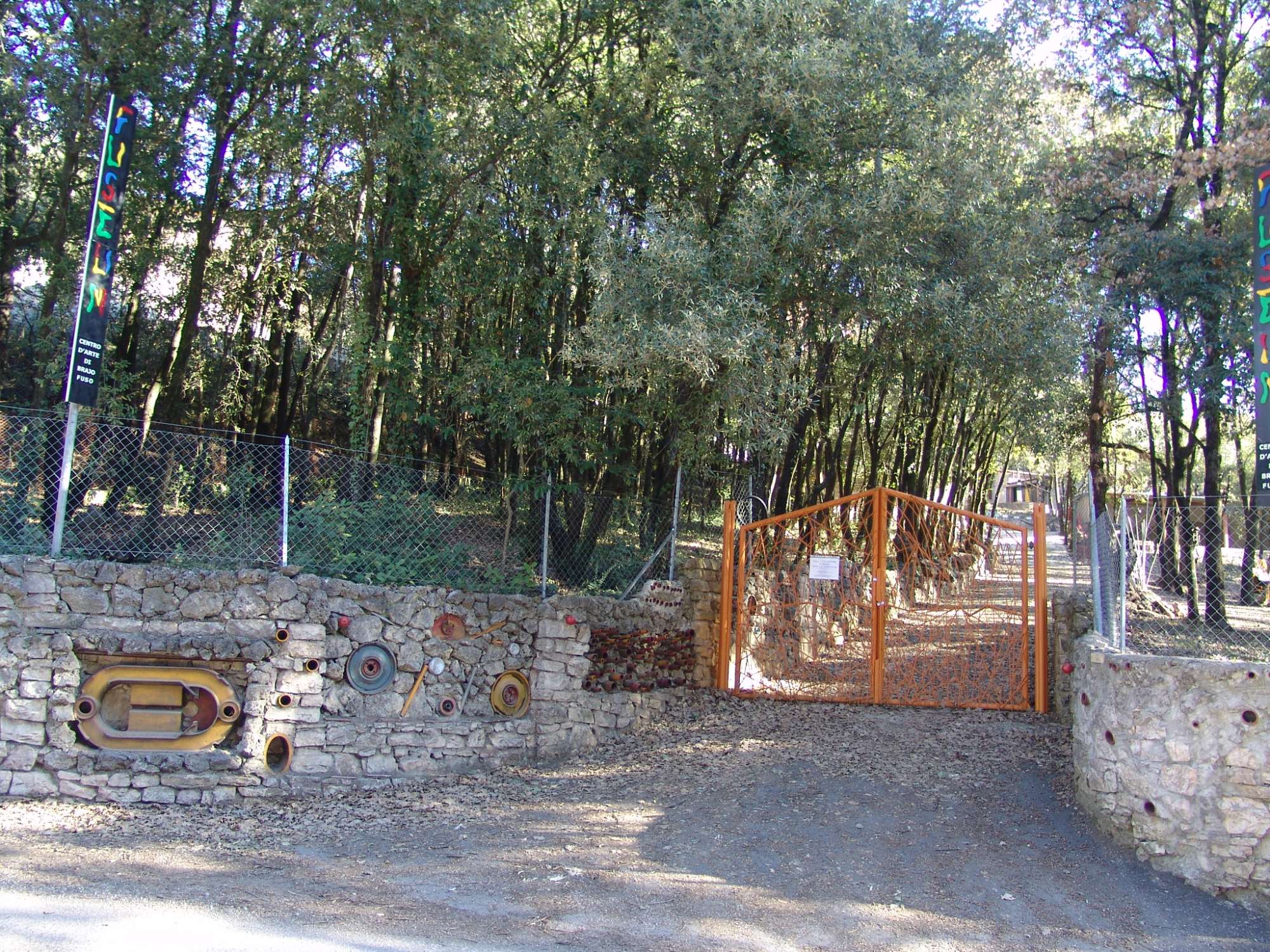
The Fuseum in Perugia, in the locality of Monte Malbe, is a “park-museum” that holds a collection of almost 150 works of Brajo Fuso (1899-1980), an artist but also practitioner from Perugia.
After his figurative debut, Brajo moved towards experimentation focusing on color and gesture potentiality—anticipating Jackson Pollock’s Action Painting—and later that of matter, up to the point of becoming one of the most significant representatives of the so called “Art of Machine Parts and Scrap Metal” and of “found” objects.
The name Fuseum comes from the fusion between the artist’s name “Fuso” and the word “museum”, as desired by the artist himself and his wife, Elisabetta Campielli—a painter herself—who built starting from 1961, in the Holm-oak woods in the northern side of town, a complex full of sculptures realized with the most disparate materials, a work of art executed in an arch of time of twenty years, composed of many parts independent from each other. With the death of the artist, the property shifted to the Sodalizio di San Martino—an old charitable and cultural institution in town that was founded in 1574—following his testamentary will.
In the “Gallery”, starting from 2008 a rich selection of works of Fuso has been gathered: eleven rooms, already arranged by the artist himself, host the nucleus of objects subdivided into cycles—such as The Chromatic Strata Cycle, The Chromic Acid Cycle, Chromate Objects, Wooden Objects, Metal-Plastics Objects and so on—and the so called “Coccibus”, which contains the bulk of his production of ceramics and his early figurative works, or the “Pittocromo”, which reconstructs the artist’s atelier with most of his tools and materials used to realize his bizarre compositions.